2026 is Mine
The wonderful mini-course to make 2026 the year you love
2026 - A once in a lifetime experience
For years you’ve hoped, tried, wished, planned, or promised yourself “this year will be better,” but transformation doesn’t happen inside the same habits, emotions, and thinking that created your stuckness. It happens the moment you step outside the familiar and choose a new path. This course gives you the clarity, structure, and heart-shift needed to do what you haven’t done before — to think differently, feel differently, decide differently, and act from a different version of yourself. When you break the old loops, a new life opens. And that’s what makes this mini-course so wonderful: it finally gives you the push, the courage, the insights to make your 2026 the best year yet.
3 Parts to this mini-course
Part 1 -

Part 1 - What’s Your Normal?
In this section we’ll look at old looping thoughts, habits and beliefs that have stopped you from progressing in the past and what is working well for you that you should keep doing.
Part 2 - What you truly want
Self-esteem gets shaped by a thousand tiny moments—good and bad. The good stuff looks like: feeling seen and safe, feeling loved and validated and the repeated emotions they feel which build their core beliefs (I am loved for who I am, I am important here, I know who I am, I can do hard things etc). Self-esteem is impacted in a positive way when adults are predictable for the most part and kids don’t fear what ‘mood’ the adult is in. This helps interpret the world as predictable, in order and stable.
The not-so-great side is: unpredictable moods in important adults, regular criticism or sarcasm, inconsistent care, being compared to siblings, love depending on performance vibes. Instability erodes self-esteem in kids as they will interpret any unpredictable behavior/attitude as somehow relating to them and they are not quite sure what caused it. They will say to themselves “There’s something wrong with me that this is happening”. Not so great is also when we rescue kids from every struggle so they have limited opportunities to learn “I can do hard things”. Chaotic homes with very little order, schedule or a chaotic emotional climate also cause self-esteem to drop significantly as kids feel insecure, never quite sure of the emotional landscape they are trying to navigate. Kids interpret these things as something is not ok, and they make the assumption that they may be to blame. In short, lack of loving connection, little, sporadic or disingenuous encouragement erode self-esteem and contribute to a shame-based nature, confusion, and constant comparison.
Chapter 3 - Ways to Build Self-Esteem in Kids


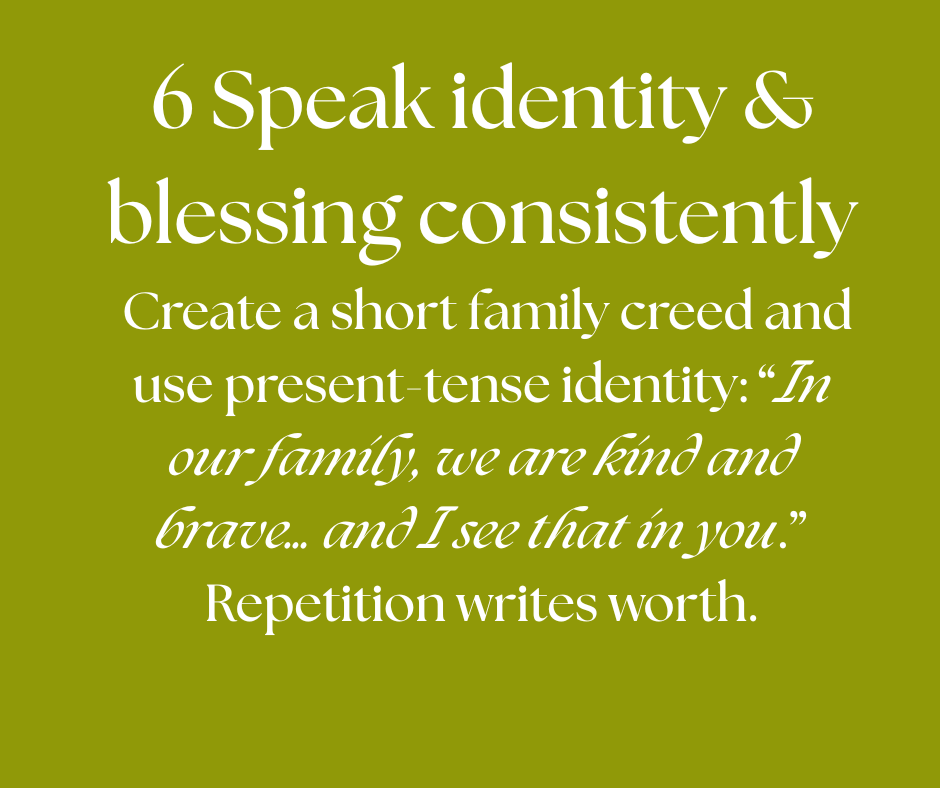
Ideas for building self-esteem in everyday ways